
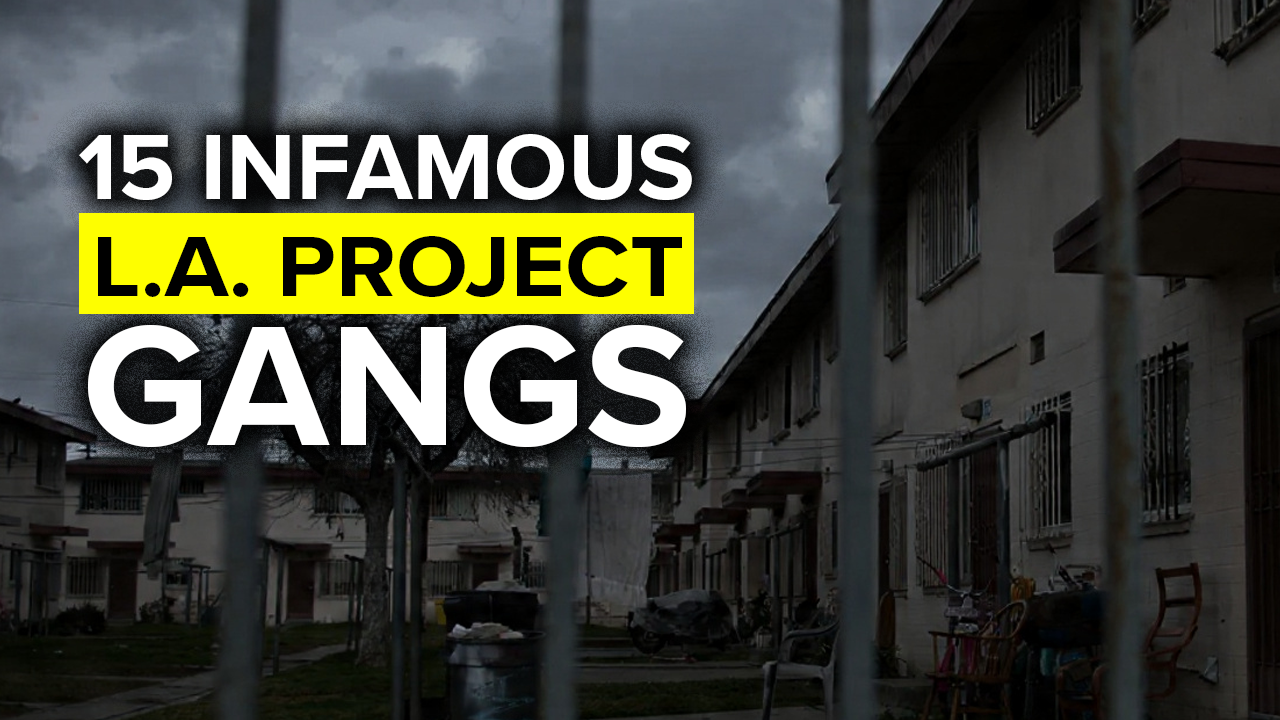
In the sprawling metropolis of Los Angeles, where Hollywood glamour often overshadows the gritty realities of urban life, a new YouTube video from Empire BBK sheds light on a lesser-discussed chapter of the city’s history. Titled “15 Infamous Gangs That Ruled LA’s Housing Projects”, the 36-minute documentary-style piece dives into the origins, rivalries, and lasting impacts of some of LA’s most notorious street gangs. Released on December 21, 2025, the video has already garnered hundreds of views and sparks a conversation about the intersection of poverty, policy, and power in America’s “Gang Capital.”
The video opens with a stark reminder: Los Angeles birthed the Bloods and Crips, two of the most infamous gangs in U.S. history. Many of these groups trace their roots to public housing projects constructed in the 1940s to accommodate wartime workers. Over time, discriminatory policies, economic neglect, and the crack epidemic transformed these complexes into breeding grounds for gang activity. Empire BBK structures the video chronologically, breaking down each gang’s story with timestamps for easy navigation, from their formation to key rivalries and modern-day evolutions.
Empire BBK, a channel known for unfiltered historical takes on urban culture, emphasizes that this isn’t about glorifying violence—it’s a factual recounting of how these groups emerged from public housing developments built during World War II. As the narrator puts it, these projects weren’t just homes; they were “front lines” in a war over turf, where colors, signs, and graffiti dictated survival. If you’re interested in LA’s underbelly or urban sociology, this video is a must-watch. You can check it out here: Watch the Video on YouTube.
The Backdrop: From War Workers to War Zones
What stands out is the human element woven throughout. Behind the headlines are stories of resilient communities—mothers working double shifts, kids navigating danger, and elders fighting to reclaim their neighborhoods. The video avoids sensationalism, focusing instead on historical context and the broader societal failures that fueled these dynamics.
The 15 Gangs and Their Strongholds
Here’s a breakdown of the gangs featured, drawing from the video’s detailed narratives:
- Varrio Dogtown (William Mead Homes): Dating back to the 1890s with Italian and Sicilian roots, this gang evolved into a Latino powerhouse by the 1920s. They turned the 1942-built William Mead into a fortress, marked by bulldog graffiti. Rivalries with Varrio Alpine Street led to deadly cycles of retaliation. A 2006 injunction and ongoing revitalization efforts have shifted the narrative toward renewal.
- Primera Flats (Aliso Village): Emerging from Russian immigrant communities in the early 1900s, they dominated the massive Aliso Village by the 1940s. Known for early narcotics trade, their beefs with groups like Fourth Street Flats escalated into full wars. The project was demolished in 1999, but the gang’s legacy persists in East LA.
- Cuatro Flats (Pico Gardens): Starting as a sports club in the 1930s, they morphed into a violent force in the 1970s PCP era. Alliances with Florencia and White Fence gave way to brutal rivalries. Demolition in 1997 marked the end of their stronghold, though cultural nods (like rapper Big Lot’s references) keep the story alive.
- Varrio Nuevo Estrada (Estrada Courts): Formed in the mid-1940s, VNE controlled the 214-unit Estrada Courts with clicks like Tiny Locos. Tied to the Mexican Mafia, their feud with White Fence defined East LA. A 2004 injunction hasn’t fully erased their influence, which extends to murals featured in Tupac’s videos.
- Big Hazard (Ramona Gardens): Splitting from White Fence in the 1930s, they ruled the 610-unit Ramona Gardens for over 80 years. Linked to the Mexican Mafia via leader Robert “Robot” Salas, they enforced control through drugs and intimidation. Recent community efforts, like those from Legacy LA, signal hope for change.
- Hacienda Village Bloods (Gonzaque Village): In the contested Hacienda Village (renamed Gonzaque in honor of an activist), this Bloods set clashed with the Latino Hacienda Village Boys across 106th Street. A 2017 murder reignited tensions, but crime dropped 26% by 2021 amid community pushes for peace.
- Grape Street Crips (Jordan Downs): Born from a 1970s split with Watts Varrio Grape, they turned Jordan Downs into a blue-and-purple-clad empire. Their war with Bounty Hunter Bloods is legendary. Ongoing redevelopment under Vision Watts aims to disrupt gang infrastructure.
- Bounty Hunter Bloods (Nickerson Gardens): Evolving from the Green Jackets in the 1960s, BHB’s 2,000+ members made the 1,066-unit Nickerson a red stronghold. Ties to rap (OFTB, TDE artists like Kendrick Lamar) add cultural layers. Recent investments, like a Dodgers-funded field, hint at renewal.
- PJ Watts Crips (Imperial Courts): Ruling the 500-unit Imperial since the 1970s, they allied with Bounty Hunters against Grape Street. Leader Tony Bogard’s 1992 truce efforts ended in his 1994 assassination. The project starred in films like Training Day, reflecting its raw intensity.
- Avalon Gangster Crips (Avalon Gardens): Founded in 1971 by Jamal Barnes, this early Crips offshoot controlled the 164-unit Avalon. A 1996 wall reduced crime, and 2020 crackdowns weakened them, paving the way for community revitalization.
- Pueblo Bishop Bloods (Pueblo Del Rio): Formed in the 1970s, PBB turned the “Low Bottoms” into a blood territory with clicks like 52 Pueblo Bishops. Founder Bobby Lavender’s leadership kept rivals at bay. Rapper Project Pat hails from here.
- Culver City Boyz (Mar Vista Gardens): A 1960s Mexican-American gang that seized the 600-unit Mar Vista in the ’70s. Their red attire (unusual for Sureños) and 1993 firebombings against Venice Shoreline Crips were infamous. Federal pressure by 2003 diminished their hold.
- Pacoima Project Boys (San Fernando Gardens): Emerging in the 1980s, PPB dominated Pacoima’s only project. A 2001 injunction and 2011 merger with Pacoima Flats adapted their operations. Community activism continues to challenge their legacy.
- Harbor City Crips (Normont Terrace): Allied with Latino Harbor City Rifas in the 1970s, they ruled the 400-unit Normont through extortion. A deadly war with Wilmas led to demolition in 1999, replaced by mixed-income housing.
- RSP Locos (Rancho San Pedro): This massive Sureño gang, with 600+ members, clashed with Dodge City Crips in the 300-unit Rancho. A 1996 murder sparked war; FBI raids in 2011 dismantled much of it, though prison-led operations persist.
Honorable Mention: The LAPD Rampart Scandal
The video closes with a twist: an “honorable mention” for the LAPD’s Rampart CRASH unit, which operated like a gang in the 1990s. Officer Rafael Perez’s exposés revealed planted evidence, frame-ups, and brutality in projects like William Mead and Ramona Gardens. The scandal overturned convictions and eroded trust, proving that corruption can wear a badge.
Legacy and Lessons
Empire BBK’s video isn’t just a list—it’s a call to understand how systemic issues like housing discrimination and economic disparity birthed these realities. Many projects are now undergoing redevelopment, with crime rates dropping and communities reclaiming spaces. Yet, as recent arrests show, the shadows linger.
If you’ve lived in these areas or have stories to share, the video’s comments section is buzzing (one pinned comment asks for your take on the most dominant gang). For a deeper dive into LA’s complex history, this piece is essential viewing. Empire BBK reminds us: behind the gangs are people, and behind the violence is a story worth telling.